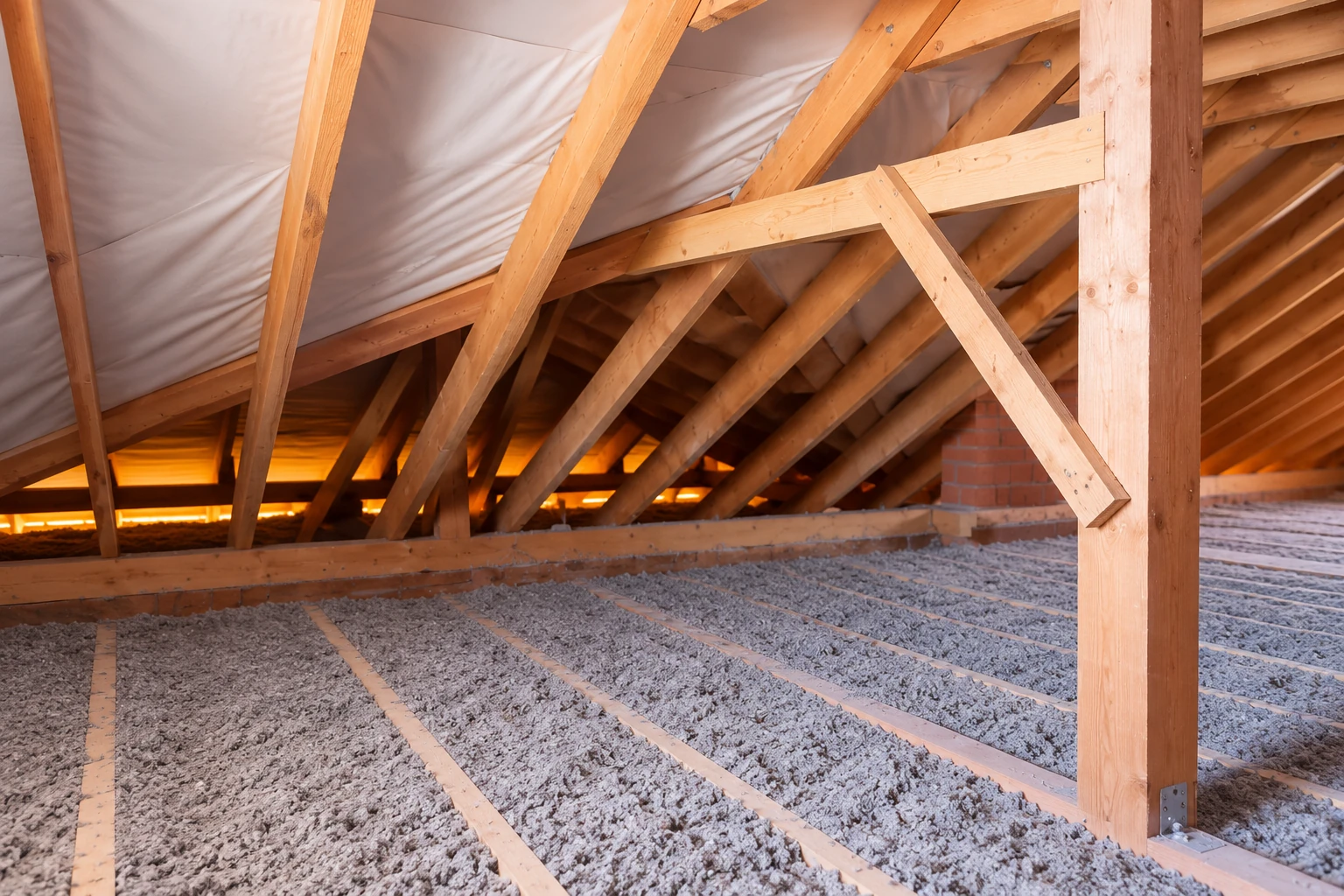
Blown-in insulation in Manhattan, KS - an attic covered evenly to the edges
Hot upstairs, cold floors or a climbing power bill usually trace back to a thin attic. We seal the gaps, then fill it evenly.
Does your attic need blown-in insulation?Here's how we handle it in Manhattan
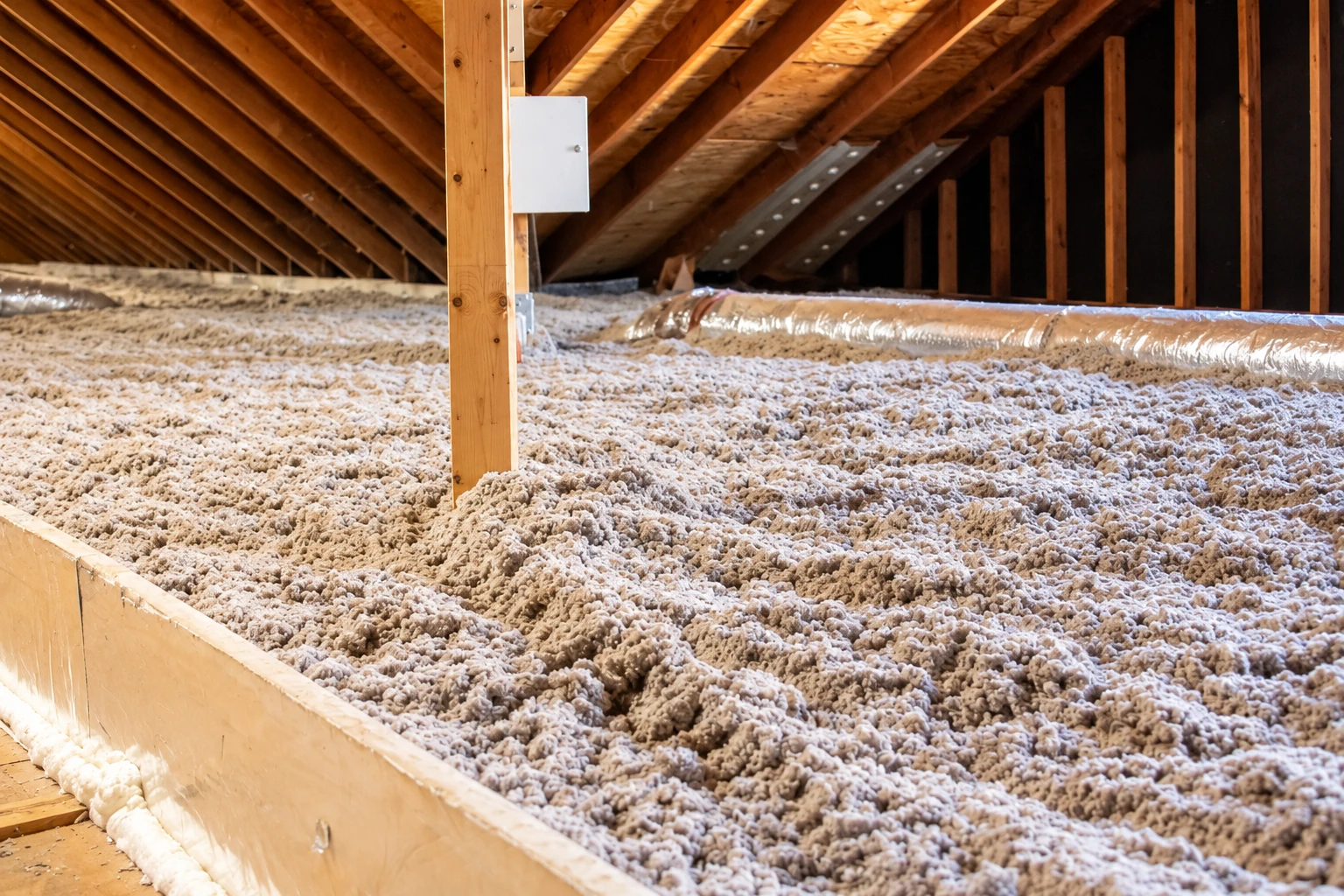
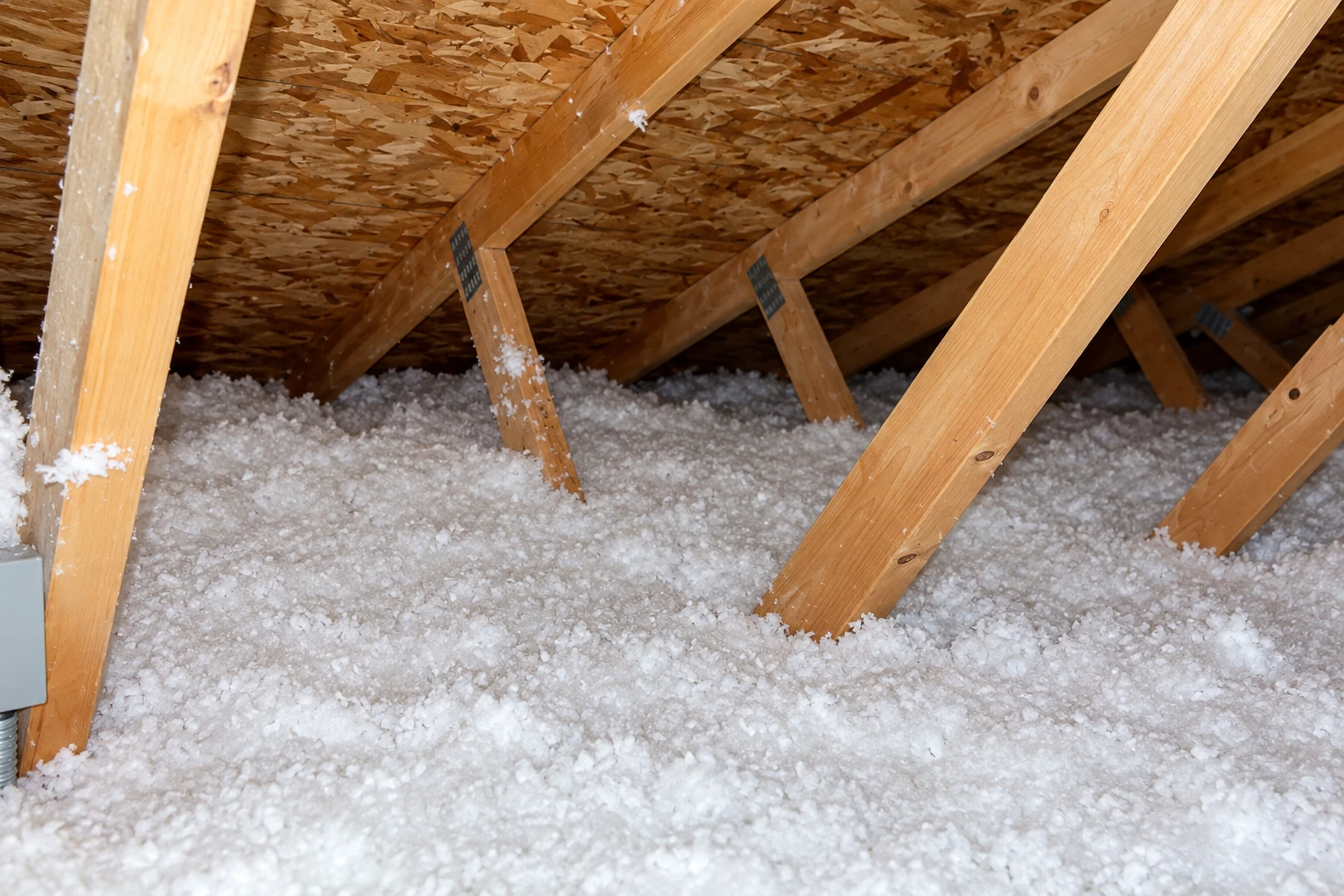
If the rooms upstairs run hot and the floors stay cold, I start in the attic, because a lot of older houses have little or no insulation up there. Blown-in insulation is loose fill, usually cellulose or fiberglass, blown through a hose across the attic floor until it covers the whole ceiling.
Before anything goes in, I look under what's already there, because new fill over wet or dirty insulation just keeps the problem, and that old material may need insulation removal first. The price mostly turns on how big the attic is and how much has to be fixed before the fill goes in, and the schedule turns on the same thing. I'll give you your own number at the estimate.
We do blown-in insulation in Manhattan, KS and the cities around it, including Junction City, Fort Riley and Abilene. If the attic is only part of the story, our home insulation work covers walls, crawl spaces and basements too.
You can count on me looking at the whole attic first and telling you plainly what I found, so give us a call at (785) 236-2032.
Blown-in insulation options for your attic
The right fill depends on what's already up there and how the attic is built, so I pick the material after I've had a look, not before.
Cellulose
Cellulose is treated paper fiber blown in loose, so it settles in around joists, wires and the odd corners of an attic floor.
Fiberglass and rock wool
Loose fiberglass and rock wool blow in the same way, and either one works well for topping up an attic whose old insulation is still dry and clean.
Attics with ductwork
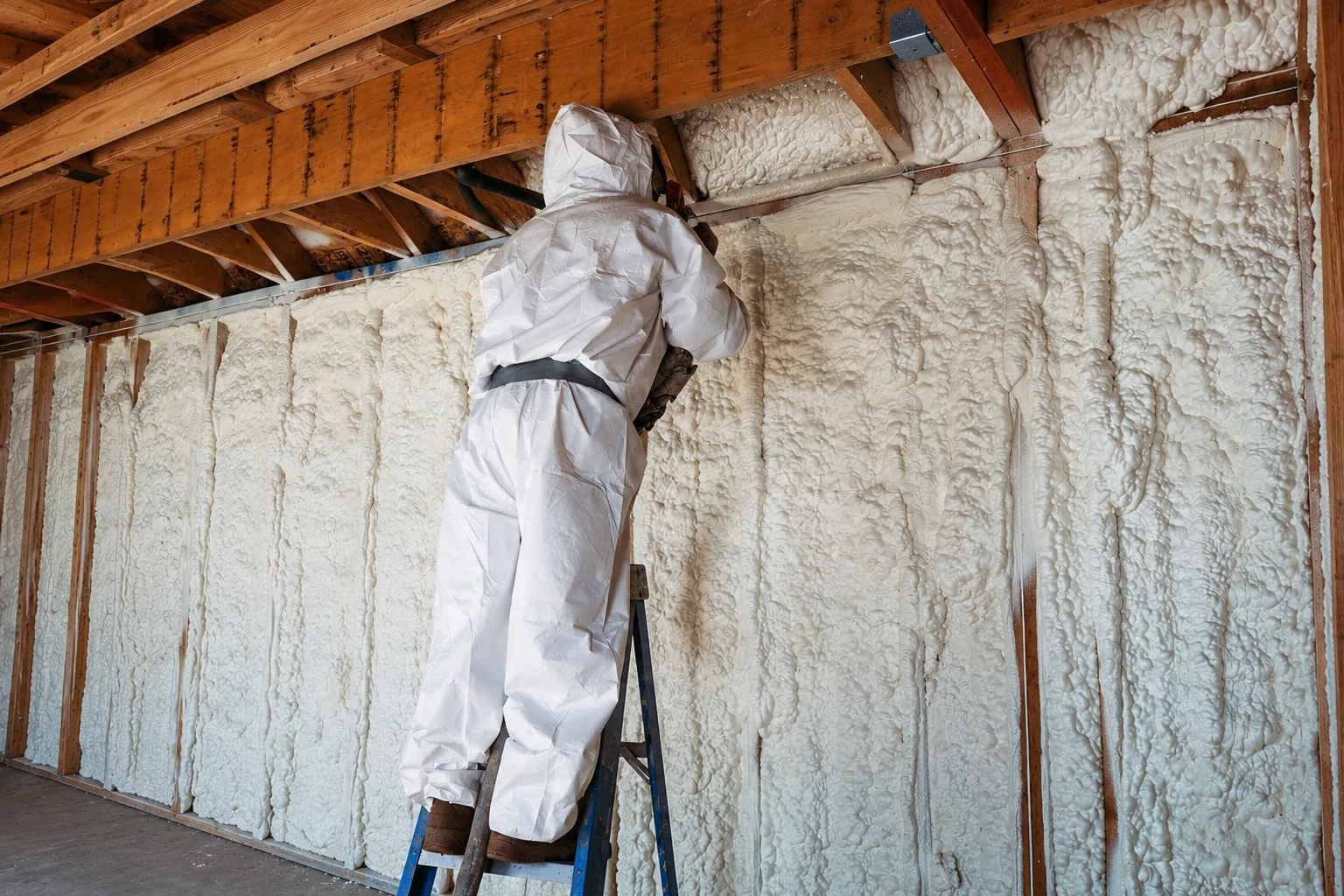
When the ductwork lives in the attic, foam can be worth its higher cost because it seals air while it insulates. Otherwise, sealing the gaps and topping up loose fill usually wins.
Why homeowners call Sterling Manhattanfor attic and blown-in work
I started this business in Manhattan in 2023 after learning the trade on a municipal crew, and I still work the way that crew did, with every job checked before it's done.
The owner looks at every attic
I come out to look at every job myself, then work alongside our own installers, so nothing gets lost between the estimate and the attic.
Old insulation checked first
Before we add anything, we pull back the old material to see if it's wet, moldy or full of droppings, because new fill on top of that keeps the problem.
Even depth out to the edges
We set baffles, simple chutes that keep the eave vents clear, where they're needed, and keep the depth even all the way to the outer edges of the ceiling.
Licensed and insured
We're licensed and insured, so the crew working above your ceiling is covered for the whole time they're up there.
A reason for every step
You'll hear what I found and why each step comes when it does, and the finished job is backed by our satisfaction guarantee.
An attic check and blown-in estimatefrom Sterling Manhattan
Tell us about your attic and anything you've spotted up there, like wet insulation, vermiculite, old wiring or vents. We'll reply within 1 business day to set up a free in-person estimate, with no pressure to book.
How the job runsfrom first call to walkthrough
I keep it simple by doing things in a set order and telling you why, so you know what's coming before it happens.
You call or message
Call (785) 236-2032 or send a message through the form, and tell us what you're noticing, like a hot upstairs, cold floors or a high power bill.
I look at the attic
I come out myself, check how many inches are up there and what's under them, and walk you through what I see and the order I'd do it in.
Permits and prep
We sort out any permit with the right office, fix problems like wet insulation or vents dumping into the attic, then air seal, which means closing the gaps around lights, pipes and the hatch.
Blowing in the fill
We put a sheet metal or mesh guard around any can lights not rated to touch insulation, then our installers and I blow the fill across the attic floor.
Walking the finished attic
When we're done, I walk through the finished job with you, show you the depth and the open vents at the eaves, and answer whatever's left.
Questions we hear
How much does blown-in insulation cost in Manhattan, KS?
There's no honest number until I've seen the attic, because the cost turns on its size, how many inches are already there and how much needs fixing or removing first. Topping up over clean, dry insulation usually costs less than a job that starts with tearing old material out, and I'll give you your own figure at the estimate.
Is blown-in insulation better than batts?
For most attic floors, yes. Blown loose fill is usually less expensive to install than batts and gives better coverage, because it fills in around joists and wires where batts leave gaps, so it's the option I'd lean toward when you're comparing quotes.
What needs to be fixed in my attic before blown-in insulation?
Wet insulation from a roof leak, moldy or rotted rafters or joists, and an attic with little or no ventilation all need fixing before new insulation goes in. So do kitchen, bath or dryer vents that blow into the attic instead of outside, and knob and tube wiring from before 1930, which can be a fire hazard under insulation. Plan time and budget for those up front, since they come first.
How do I tell if my attic has vermiculite insulation?
Vermiculite looks like light, flaky gray pebbles about the size of a pea, and it may contain asbestos. If you see it, leave it undisturbed and have an approved lab test it, and we hold off on any work up there until you have the results.
How long does blown-in insulation last?
One cost guide rates properly installed blown-in insulation to last between 60 and 80 years. Properly installed is the part that matters, which is why we sort out leaks, vents and air sealing before any fill goes in.
Who handles building permits for insulation in Manhattan, KS?
The city's Risk Reduction office handles building permits and contractor licenses, and you can reach it at 785-587-4506 or apply through the city's online portal. The city's list of work that needs no permit names things like small sheds, fences, low decks and painting, not insulation, so we check with the office for your address and take care of any permit the job calls for before we start.
Blown-in insulation around Manhattan
We're based in Manhattan and do the same attic work in the cities around it, where plenty of the older houses we see still have thin attics. Pick your area below or give us a call.
Book your blown-in insulation check in Manhattanand see what's really up there
Call (785) 236-2032 or use the form, and mention the age of your house and anything you've already spotted in the attic, so I come out ready to check the right things for your blown-in insulation estimate.